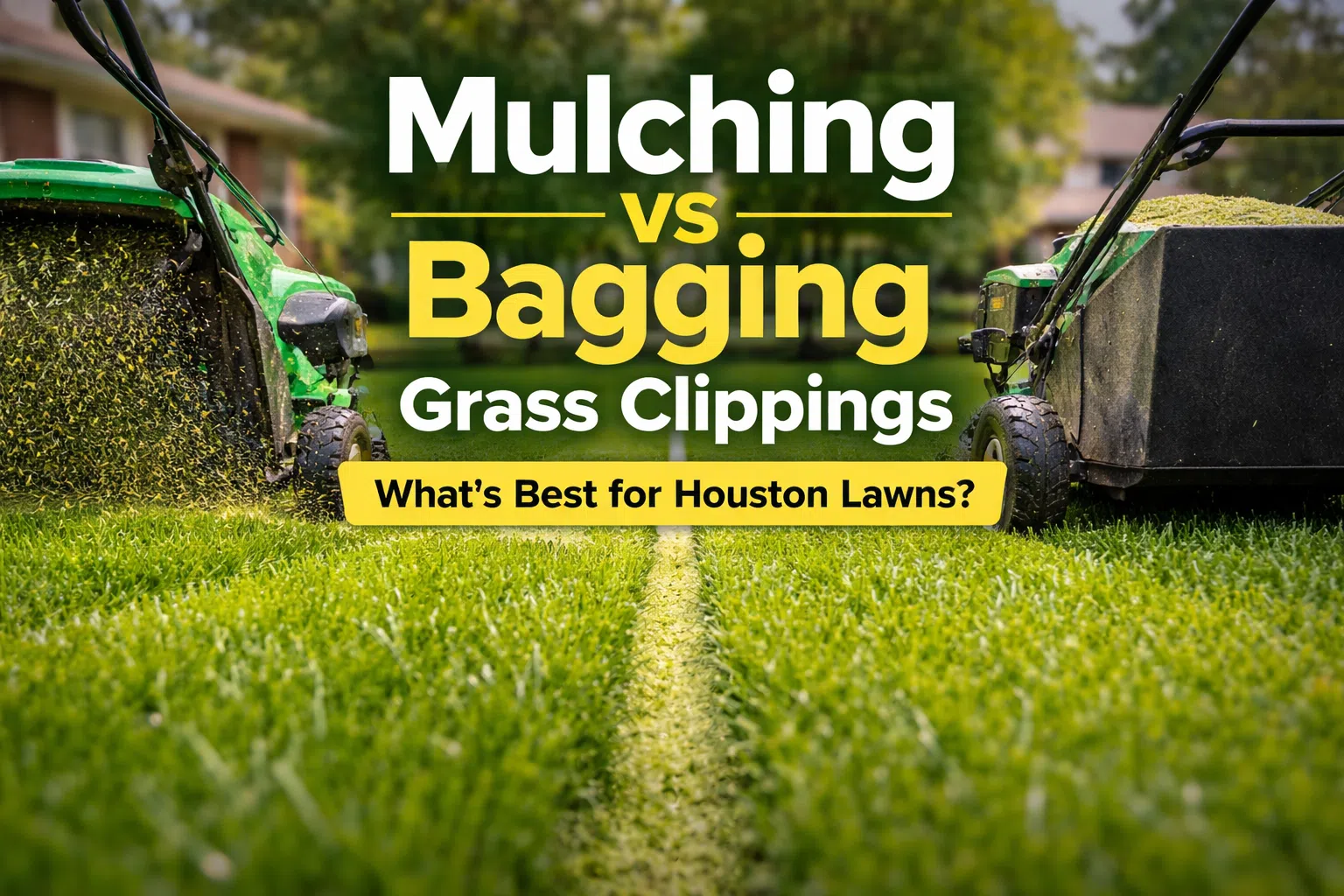
Lawn mower mulching grass on one side and bagging clippings on the other, showing the difference between mulching and bagging grass clippings for Houston lawns.

Mulching vs Bagging Grass Clippings: Why Bagging is Better for Houston Lawns

Mulching vs bagging grass clippings: learn when to mulch, when to bag, and how Houston heat, rain, and turf type affect your best choice.

Want a Beautiful Lawn Without the Guesswork?

Spring timing in Houston is critical — applying the wrong treatment at the wrong time can cause weeds, patchy grass, or wasted money.

We offer free professional lawn evaluations to help homeowners get it right.

After mowing your lawn, you’re left with a common question: should you mulch grass clippings or bag them?

In many parts of the country, mulching is often recommended because it returns nutrients to the soil and reduces yard waste. But Houston lawns are different. Our combination of rapid grass growth, heavy rainfall, humidity, and thick turf varieties means that leaving clippings on the lawn isn’t always the best option.

For many Houston properties, bagging grass clippings can lead to a healthier, cleaner lawn, especially during peak growing seasons.

Understanding when to mulch and when to bag can make a noticeable difference in the appearance and health of your lawn.

What Mulching and Bagging Grass Clippings Actually Do

Mulching Grass Clippings

Mulching mowers cut grass clippings into small pieces and return them to the lawn surface. The clippings break down and return nutrients—primarily nitrogen—back into the soil.

Potential benefits of mulching include:

  • Recycling nutrients back into the lawn

  • Reducing yard waste

  • Eliminating the need to dispose of clippings

However, these benefits depend heavily on clipping size and lawn conditions.

Bagging Grass Clippings

Bagging removes the clippings entirely during mowing.

Benefits of bagging include:

  • A cleaner lawn appearance

  • Reduced thatch buildup

  • Lower risk of lawn disease

  • Better airflow and sunlight reaching the grass

  • Fewer clumps left behind after mowing

While bagging removes some nutrients from the lawn, regular fertilization typically replaces what is lost.

Mulching vs Bagging Grass in Houston: The Real Pros and Cons

Mulching: Works Best Under Ideal Conditions

Mulching works well when:

  • Grass is mowed frequently

  • Clippings are very short

  • The lawn is dry

  • Growth rates are moderate

When clippings are small enough, they break down quickly and become a natural fertilizer.

However, if grass grows too long between mowings, mulching can create problems.

Large clippings may:

  • Clump together

  • Block sunlight from reaching the grass

  • Trap moisture against the turf

  • Increase the risk of fungal disease

These conditions are common in Houston’s climate.

Bagging: Cleaner Lawns and Better Control in Houston

Bagging is often the better option when lawns are growing quickly or when conditions are wet.

Removing clippings helps:

  • Prevent clumps and debris on the lawn

  • Improve airflow around grass blades

  • Reduce moisture buildup

  • Limit fungal growth

  • Maintain a consistently neat appearance

For many homeowners, the visual difference alone makes bagging worthwhile.

Comparison of mulched grass clippings clumping on a wet Houston lawn versus a mower bagging grass clippings in humid conditions.

Why Houston Lawns Often Benefit from Bagging

Houston’s climate creates unique challenges for lawn care. Several local factors make bagging clippings especially helpful.

Rapid Growth

During late spring and summer, St. Augustine lawns can grow aggressively. Even a one-week delay in mowing can produce large clippings that are difficult to mulch cleanly.

Bagging removes that excess material immediately, preventing clumps from forming.

Heavy Rain and Morning Dew

Wet grass is extremely common in Houston. Clippings produced while mowing wet turf tend to stick together and mat on the surface.

Bagging prevents these wet clumps from sitting on the lawn and creating uneven patches.

Humidity and Fungal Pressure

Houston’s humidity creates favorable conditions for lawn diseases such as brown patch and other fungal issues.

Removing clippings reduces the amount of damp organic material sitting in the canopy where fungus thrives.

Thick Turf Varieties

St. Augustine grass—the most common lawn grass in Houston—has a dense growth habit that can trap clippings on the surface.

Bagging keeps the lawn canopy open and improves airflow through the turf.

The Most Important Factor: Mowing Frequency

Whether mulching works well often comes down to how frequently the lawn is mowed.

Mulching can work if:

  • The lawn is mowed frequently

  • Only a small amount of grass is removed each time

However, if mowing is delayed and the grass becomes too tall, mulching may leave large clippings behind.

Rule of thumb:
If clippings are visible after mowing, bagging will usually produce better results.

When Professional Lawn Maintenance Makes the Difference

Maintaining a healthy Houston lawn requires more than choosing between mulching and bagging. Mowing height, irrigation timing, blade sharpness, fertilization schedules, and seasonal conditions all play important roles.

If you would rather have those details handled by professionals who understand Houston turf conditions, Strong Landscaping provides expert lawn maintenance designed specifically for local lawns. Learn more about our services

The Bottom Line

Mulching grass clippings can work well in certain situations, but Houston’s climate often makes bagging the better choice.

With fast growth, heavy moisture, and dense turf varieties, removing clippings frequently helps prevent buildup, reduce disease risk, and keep lawns looking clean and well maintained.

Understanding how local conditions affect your lawn can make a significant difference in long-term turf health.

Need help maintaining your lawn?

Let Strong Landscaping Handle It For You

Our professional lawn care services include:

  • Spring fertilization programs

  • Weed prevention and control

  • Expert mowing and maintenance

  • Irrigation inspections

  • Seasonal lawn health assessments

Share:

Leave a Reply

Your email address will not be published. Required fields are marked *

On Key

Related Posts

Shaded Houston backyard with healthy green grass in sunlight and thinning lawn under large oak tree canopy

Best Shade Tolerant Turf Options for Houston

Not all grass handles Houston shade equally. Here's how to choose the right shade-tolerant turf for your yard — and when to stop fighting the site altogether.
A well-maintained green lawn in front of a craftsman-style home with a banner reading “Houston Spring Lawn Care Checklist – Get a Thicker, Greener Lawn Before Summer Heat Hits.”

Houston Spring Lawn Care Checklist: Get a Thicker, Greener Lawn Before Summer Heat Hits

Spring is the most important season for Houston lawns. The right timing now prevents weeds, strengthens roots, and sets your grass up to survive our intense summer. Follow this step-by-step checklist — or let our experts create a custom plan for your yard.
Lawn professional mowing a residential lawn in a Houston neighborhood, representing professional lawn maintenance services.

Houston Lawn Maintenance Service: Why “Doing the Basics” Still Leaves Lawns Struggling

Get lawn care maintenance tips Houston homeowners trust, from mowing and watering to weed control and soil care for resilient, polished turf year-round.