
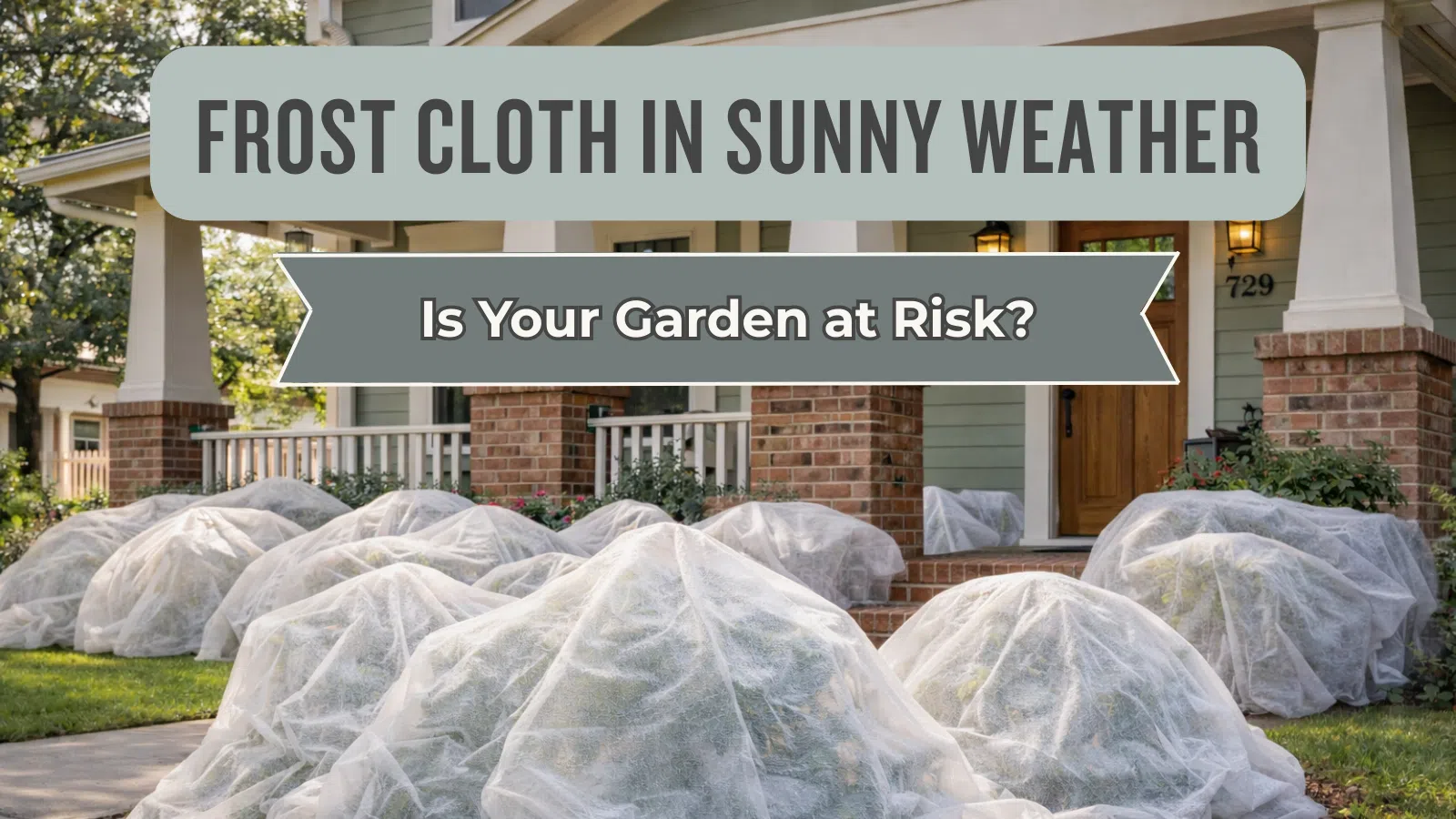
Frost cloth is an essential tool for protecting plants during cold snaps, especially in unpredictable Texas winters. When used correctly, it can save tender plants from frost and freeze damage. However, Frost cloth in sunny weather can cause plant stress and damage. Learn when to remove frost covers to protect Houston landscapes.leaving frost cloth on plants during sunny weather can actually do more harm than good.
How Frost Cloth Protects Plants
Frost cloth (also known as a frost blanket or freeze cover) works by:
Trapping warmth from the soil overnight
Shielding plants from cold air and frost
Reducing temperature swings during freeze events
This protection is extremely effective overnight and during cold, cloudy days. Problems begin when frost cloth stays in place once the sun comes out.
At Strong Landscaping, we often see landscape damage caused not by cold—but by extended frost cloth coverage after temperatures rebound. Here’s what every homeowner should know.
The Hidden Risks of Frost Cloth Sunny Weather
1. Overheating in Sunny Weather
On clear, sunny days, temperatures beneath frost cloth can rise dramatically—often 20–30 degrees warmer than the surrounding air.
This can lead to:
Heat stress and wilting
Scorched or browned leaves
Drooping plants even when soil moisture is adequate
In Texas landscapes, this is one of the most common causes of post-freeze plant damage we see.
2. Trapped Moisture and Disease
Extended frost cloth coverage limits airflow and traps humidity. This creates ideal conditions for:
Fungal infections
Mold and mildew
Stem and leaf rot
Plants may look fine initially, then decline days later due to moisture-related stress.
3. Reduced Sunlight and Stunted Growth
While frost cloth is breathable, it still reduces light exposure when left on continuously.
This can cause:
Yellowing or pale foliage
Leggy or weak growth
Slower recovery after a freeze
Plants need sunlight to rebound after cold stress—blocking it slows the healing process.
When Should You Remove Frost Cloth?
As a best practice:
Remove frost cloth once temperatures rise above freezing and the sun is out
Late morning is ideal, after frost has melted
Reapply only if another freeze is forecast for the evening
If daytime temperatures reach the 50s or higher, frost cloth is typically no longer necessary.
Best Practices for Frost Cloth Use in Texas Landscapes
✔️ Monitor daily weather forecasts
✔️ Remove covers during sunny days
✔️ Re-cover plants only when frost is imminent
✔️ Avoid tightly wrapping plants—allow airflow
✔️ Secure fabric without compressing foliage
Frost cloth should be viewed as temporary overnight protection, not a multi-day covering.
Professional Landscape Tip from Strong Landscaping
Many cold-damaged plants actually survive the freeze—but decline later due to overheating or moisture stress from improper frost cloth use. Knowing when to remove protection is just as important as knowing when to apply it.
If you’re unsure how to protect your landscape during freeze events, professional guidance can prevent costly plant loss.
Need Help Protecting Your Landscape?
Strong Landscaping helps Houston-area homeowners protect and maintain healthy landscapes year-round. From freeze preparation to post-storm plant care, we understand how Texas weather really impacts your plants.
📍 Serving Houston and surrounding areas
🌿 Boutique, hands-on landscape expertise
visit consultation.stronglandscaping.com to schedule a free consultation


