
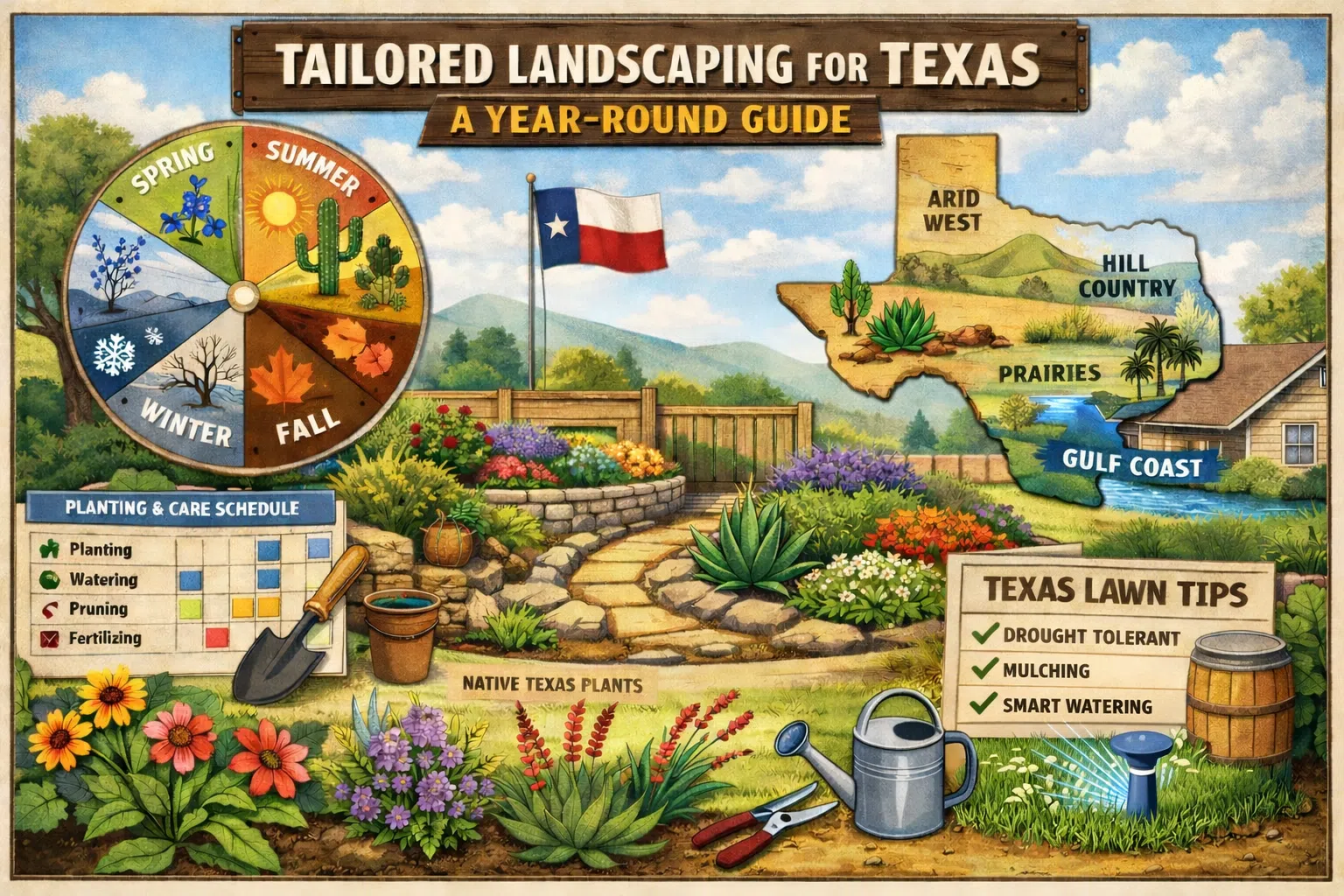
Creating and maintaining a tailored landscape that thrives in Texas’s unique climate is both an art and a science. The Lone Star State is known for its vastness, hosting diverse climates ranging from arid desert in the west to humid subtropical conditions in the east. As a premier landscaping service based in Houston, Strong Landscaping understands the intricacies involved in crafting exquisite outdoor spaces that are tailored to the Texan environment. This article provides a comprehensive guide to maintaining your landscape throughout the year, ensuring it remains vibrant and healthy against Texas’s climatic backdrop.
Understanding Texas’s Climatic Palette
Texas’s climate varies significantly from region to region, making it essential to tailor landscaping strategies accordingly. Houston, where Strong Landscaping operates, experiences a humid subtropical climate. This means hot and humid summers, mild winters, and occasional tropical storms. This climatic condition influences everything from plant selection to soil management and dictates the specific maintenance activities that should be performed throughout the year.
👉 Checkout the USDA Plant Hardiness Zone Map
The essence of a successful landscape maintenance schedule is understanding the regional climate nuances and integrating them into the selection of plants, lawn care practices, and maintenance routines.

Monthly Maintenance Overview
Knowing what activities to perform and when to perform them can significantly impact the health and aesthetics of your landscape. Here’s a breakdown of a monthly maintenance schedule tailored specifically for the Texas climate: We also have included a couple links to our favorite products that can help!
January – Winter Pruning and Soil Care
January in Texas might not bring harsh winters, but it’s still the best time for heavy pruning. Pruning in this period helps manage plant growth and encourages healthy blooms in the spring. Focus on deciduous trees and shrubs, particularly those that flower on new wood, such as crape myrtles.
- January Tasks
- Prune trees and shrubs before new growth begins. (Fiskar DualAction Pruner)
- Amend the soil with organic matter to prepare for the upcoming growing season.
- Inspect for and remove dead or damaged branches.
February – Planning and Prepping
As winter begins to fade, it’s time to plan for spring by preparing the beds and purchasing new plants.
- February Tasks
- Apply a light layer of mulch to protect against any late frosts and to hold in moisture.
- Start seeds indoors for annual plants.
- Test soil pH and adjust as needed. (My Soil Test Kit)
- Begin planning any new landscaping projects.
March – Spring Awakening
Spring officially kicks off in March in Texas, and with it comes a flurry of activity.
- March Tasks
- Start planting cool-season annuals and vegetables.
- Feed established lawns with a slow-release fertilizer.
- Begin regular watering schedules as the temperatures rise.
- Check for early signs of pest activity.
April – Full Bloom and Fertilization
April is a beautiful time where most plants come into full bloom, making it critical to maintain rigorous care.
- April Tasks
- Continue planting warm-season flowers and crops.
- Deadhead spent blooms to encourage more flowers.
- Apply preventative fungicides on plants prone to disease. (Bio Advanced 3-in-1)
- Fertilize your lawn to maintain green, lush grass.
May – Pest Management
With temperatures rising, pests can become a major issue.
- May Tasks
- Monitor and control common pests such as fire ants and bagworms.
- Ensure robust irrigation practices are in place as temperatures increase.
- Mulch garden beds to retain moisture and suppress weeds.
June – Heat Readiness
With the onset of summer, maintaining moisture becomes paramount.
- June Tasks
- Water deeply and less frequently to encourage drought-tolerant roots.
- Implement shade cloths for vulnerable plants.
- Continue to check for pests, particularly lawn grubs.
July and August – Peak Heat Vigilance
These months can be oppressively hot, demanding a diligent approach to irrigation and pest management.
- July & August Tasks
- Water early in the morning to reduce evaporation loss.
- Adjust lawn mower to higher settings to protect grass from extreme heat.
- Regularly inspect for signs of drought stress.
September – Transition and Preparation
As temperatures begin to cool, September is a transition month.
- September Tasks
- Begin divide and replant perennials.
- Fertilize the lawn to strengthen root systems for winter.
- Trim trees and shrubs to shape them before winter sets in.
October – Seasonal Brightness
Cooling temperatures make October perfect for planting cool-season annuals.
- October Tasks
- Plant bulbs like tulips and daffodils for spring blooms.
- Harvest remaining summer vegetables.
- Remove fallen leaves to prevent lawn diseases.
Native plants perform especially well here. The Lady Bird Johnson Wildflower Center is the top Texas native plant authority:
👉 https://www.wildflower.org
November – Soil Enhancement
As the landscaping season slows, focus returns to soil health.
- November Tasks
- Apply a final layer of mulch before winter.
- Compost organic matter to enhance soil quality.
- Assess overall garden layout and plan any restructuring.
December – Contemplation and Minor Adjustments
A time for rest and reflection, December allows for minor adjustments and preparation for the coming year.
- November Tasks
- Wrap tender plants to protect against frost.
- Ensure irrigation systems are operating efficiently.
- Pest-proof main structures by sealing gaps and setting traps for rodents.
Why a Tailored Approach Matters
Taking a generalized approach to landscape maintenance often leads to subpar results, particularly in a diverse climate like Texas’s. Customizing your landscape maintenance schedule ensures that practices are aligned with regional climatic conditions, leading to more resilient and visually appealing landscapes.
Moreover, incorporating clientele aesthetics into landscape plans means plants, colors, and features are not only suited to the climate but also reflect the client’s personal preferences, adding significant value and satisfaction.
Advanced Strategies and Tools
For those seeking to elevate their landscaping game, consider employing advanced strategies:
- Smart Irrigation Systems: Reduce water usage while ensuring plants receive adequate moisture.
- Native Plant Selection: Utilize plants native to Texas for lower maintenance and higher resilience.
- Soil Moisture Meters: These aid in efficiently managing watering schedules.
- Seasonal Aesthetic Design: Coordinate colors and textures to keep landscapes visually appealing year-round.
The Role of Professional Guidance
Partnering with a professional service like Strong Landscaping can provide invaluable advantages in maintaining an elegant and thriving landscape. With their sophisticated, attentive, and innovative approach, they seamlessly integrate bespoke design elements with practical maintenance practices tailored to Texas’s climate.
Next Steps
As you move forward with your Texas landscape maintenance schedule, reflect on the specific needs of your region, the plant choices that best suit your aesthetic goals, and the practical maintenance methods that will sustain them. Opt for tailored professional services if you’re aiming for elevated craftsmanship and a truly personal touch in your outdoor spaces.
Embarking on a journey to maintain a stunning Texas landscape is one that rewards dedication and strategic planning. Whether you choose to handle this yourself or employ expert assistance, the key is to remain responsive to the changing seasons and unique regional nuances that Texas presents.
Affiliate Disclosure:
Some of the links on this page are Amazon affiliate links. This means that if you click a link and make a purchase, Strong Landscaping may earn a small commission at no additional cost to you. As an Amazon Associate, we earn from qualifying purchases. These earnings help support the continued creation of helpful landscaping, irrigation, and outdoor living content.


